
Tooth extraction in Varna
Medically reviewed by Dr. Iva Yordanova, specialist in prosthodontics ·
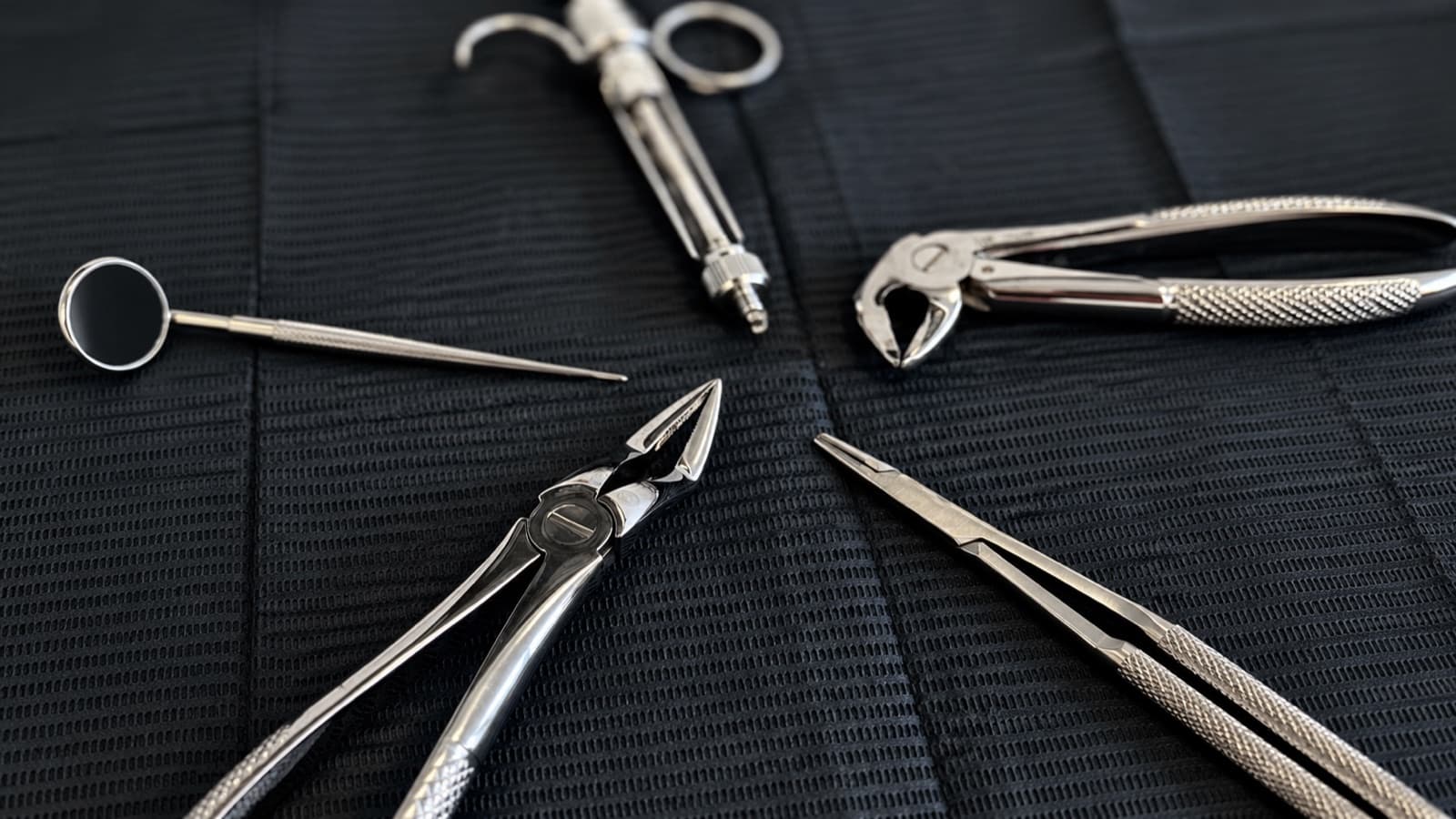
Tooth extraction is carried out under local anaesthesia when the tooth cannot be reliably saved – with deep destruction, a root fracture, failed root canal treatment with no option for retreatment, or advanced periodontal disease. When a tooth is irreversibly damaged, timely extraction protects you from pain, infection and damage to the neighbouring teeth. At Dr. Yordanova’s practice in Varna, extractions are gentle, completely painless and followed by careful attention to your quick recovery.
When does a tooth need to be extracted?
Extraction is a last resort – we turn to it when the tooth cannot be saved:
- Deep destruction below the gum line
- A vertical root fracture
- Failed root canal treatment with no option for retreatment
- Very loose teeth with advanced periodontitis
- Teeth that get in the way of prosthetic or orthodontic treatment
How does a painless extraction work?
After an examination and an X-ray we give modern local anaesthesia and wait for it to take full effect. The tooth is removed with a gentle technique and minimal trauma to the surrounding bone and gum. You receive clear written instructions for aftercare.
What comes after the extraction?
The gap should not be left for long – the neighbouring teeth tilt and the opposing ones “grow” into the space. That is why we plan timely replacement with a bridge, a denture or a referral for an implant, so you keep a full, healthy bite.
Extracting a tooth is the last step, once the options for reliably saving it have been exhausted.
Frequently Asked Questions
Does tooth extraction hurt?
No – the procedure is completely painless under local anaesthesia. After it wears off, mild discomfort is managed with ordinary painkillers.
What should I do after an extraction?
Keep the gauze in place for 30–40 minutes, do not rinse for the first 24 hours, and avoid hot food, alcohol and cigarettes. We give you detailed instructions.
How long does the wound take to heal?
The soft tissues heal in 7–14 days. Full recovery of the bone takes several months – that is when we also plan the permanent replacement.