
Oral surgery in Varna
Medically reviewed by Dr. Iva Yordanova, specialist in prosthodontics ·
Oral surgery covers surgical procedures in the mouth – extraction of teeth and wisdom teeth, removal of cysts, apicoectomy and pre-prosthetic preparation of the tissues – carried out under local anaesthesia. Treatment is built on a gentle approach: every procedure is preceded by careful diagnosis and planning, and when intervention is needed, the aim is to perform it precisely with minimal trauma to the surrounding tissues. All procedures are carried out in Varna, and afterwards you receive written recovery instructions and a follow-up appointment.
In surgery, precision means less trauma to the tissues and a calmer recovery.
Principles of practice — Accurate diagnosis, individual planning and the greatest possible preservation of natural tooth structure underpin every treatment. The aim is not merely to solve a specific problem, but to achieve a result that is functional, natural and stable over time.
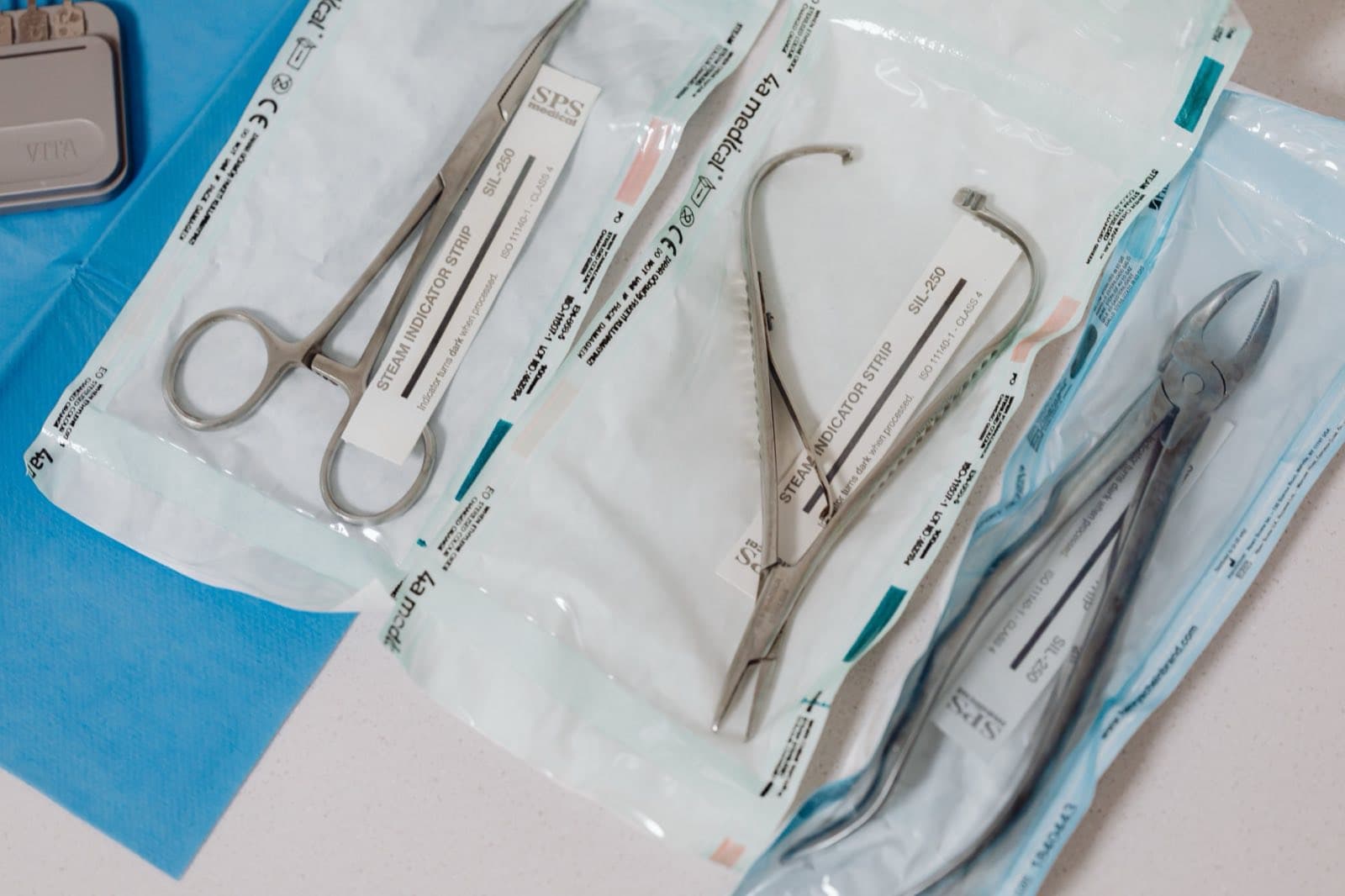
Surgical procedures at the practice
Tooth extraction
Tooth extraction is carried out under local anaesthesia when the tooth cannot be reliably saved – with deep destruction, a root fracture, failed root canal treatment with no option for retreatment, or advanced periodontal disease. Before the procedure we carry out a clinical and, if needed, X-ray assessment. We take care to preserve as much bone and soft tissue as possible, and when the tooth will be replaced, the future restoration is taken into account when planning the extraction.
Learn more about “Tooth extraction”Extracting a tooth is the last step, once the options for reliably saving it have been exhausted.
Wisdom tooth extraction
Wisdom teeth are the third molars – the last teeth to come through, and often the only ones without enough room in the jaw. They may stay fully or partly impacted in the bone, erupt in the wrong position or cause recurring inflammation. Not every wisdom tooth needs removing: the decision is made after a clinical and X-ray analysis of its position, roots and relationship to the neighbouring teeth and important anatomical structures.
Learn more about “Wisdom tooth extraction”It is not having a wisdom tooth but its position and condition that decide whether it needs to come out.
Cyst removal
A jaw cyst is an enclosed, fluid-filled cavity that most often develops around the tip of the root of a tooth with a dead pulp or around an unerupted tooth. It grows slowly and in most cases causes no symptoms for a long time, so it is sometimes found by chance on an X-ray. The approach depends on its origin, size and position, and after treatment we monitor recovery and bone healing in the affected area.
Learn more about “Cyst removal”Cysts can develop for a long time without symptoms — timely diagnosis allows more precise treatment planning.
Apical surgery
Apical surgery, also known as apicoectomy or root-end resection, is a microsurgical procedure in which the tip of the root and the inflamed tissue around it are removed and the root canal is then sealed from the end. It is used when infection persists despite root canal treatment or retreatment. Usually about 3 mm of the root tip is removed. The aim is to eliminate the source of infection and create the conditions for healing while keeping the natural tooth.
Learn more about “Apical surgery”Sometimes a few millimetres are decisive — apical surgery lets us reach the problem directly and gives the tooth another chance.
Pre-prosthetic surgery
Pre-prosthetic surgery is the surgical preparation of the bone and soft tissues before prosthetic treatment – smoothing bony ridges, correcting the attachment of frenula and shaping the denture-bearing area – so that the future restoration fits stably and comfortably. It is used when the anatomical conditions do not allow a sufficiently stable and functional restoration to be made. The surgical and prosthetic stages are planned as parts of one treatment plan.
A precise prosthetic restoration begins with proper preparation of the tissues it will be built on.
Frequently Asked Questions
Does tooth extraction hurt?
The procedure itself is completely painless thanks to modern local anaesthesia. Mild discomfort after it wears off is managed with ordinary painkillers.
When does a wisdom tooth have to be removed?
With inflammation, caries in the wisdom tooth or the tooth next to it, crowding of the dental arch or when it cannot be cleaned. The decision is made after an examination and an X-ray.
How long does the site take to heal after an extraction?
The soft tissues heal in 7–14 days, and the bone fully recovers over several months. You receive detailed instructions for quicker and more comfortable healing.
What happens after the tooth is extracted?
We plan to replace the missing tooth – with a bridge, a denture or a referral for an implant – so that you keep full chewing function and the remaining teeth do not shift.