
Root canal treatment in Varna
Medically reviewed by Dr. Iva Yordanova, specialist in prosthodontics ·
Root canal, or endodontic, treatment removes the inflamed or infected dental pulp and then cleans, disinfects and seals the root canals – the procedure that allows a natural tooth to be kept rather than extracted. We work under magnification, paying close attention to the complex anatomy of the root canal system and preserving as much healthy tooth tissue as possible. At Dr. Iva Yordanova’s practice in Varna, root canal treatment covers primary endodontic treatment, root canal retreatment, treatment of pulpitis and treatment of periapical periodontitis.
Principles of practice — Accurate diagnosis, individual planning and the greatest possible preservation of natural tooth structure underpin every treatment. The aim is not merely to solve a specific problem, but to achieve a result that is functional, natural and stable over time.
Endodontic services at the practice
Endodontic treatment
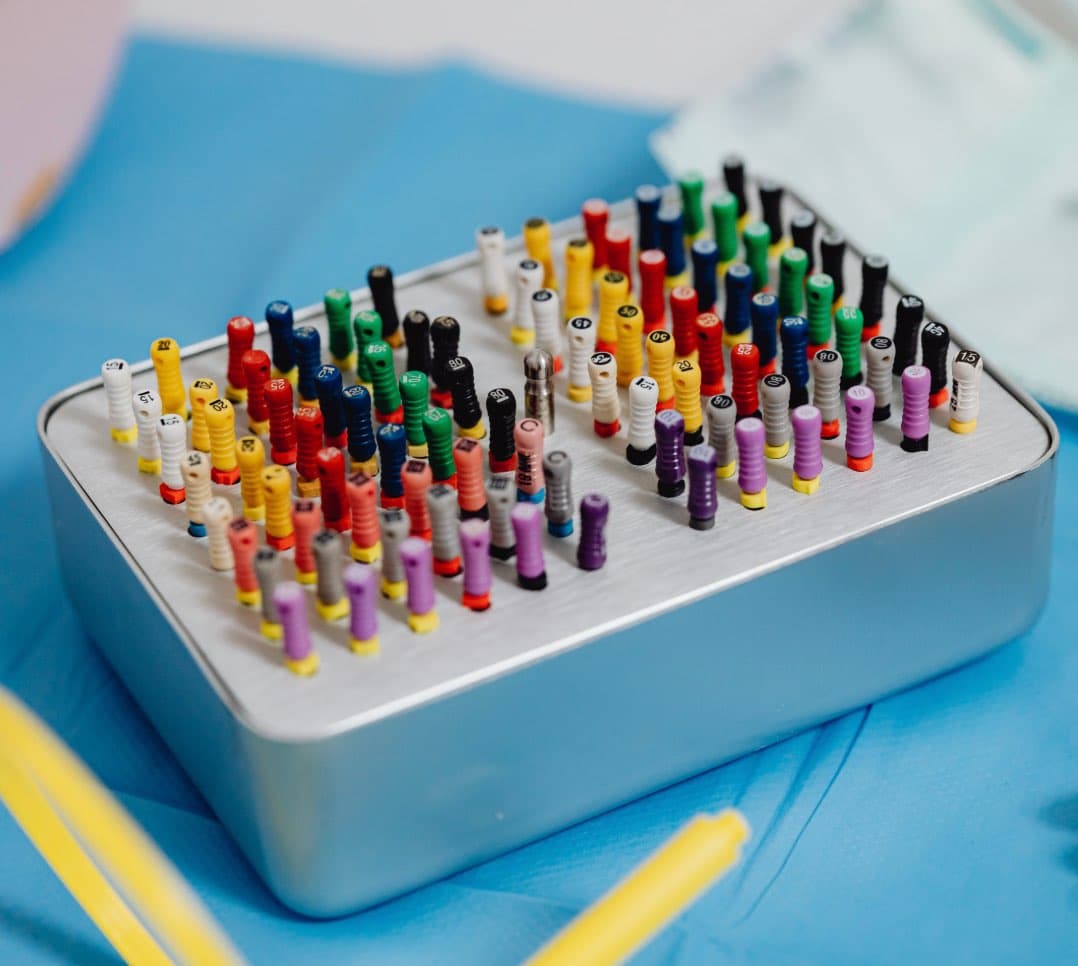
We remove the inflamed pulp, clean and shape the root canals with rotary nickel-titanium instruments, and fill them tightly and permanently. Treatment is done under local anaesthesia and in most cases is completed in one or two visits.
Root canal retreatment
Root canal retreatment, also called endodontic revision, means removing the old root filling and cleaning, disinfecting and filling the canals again in a tooth where infection has remained or returned. The cause may be complex root canal anatomy, a missed canal, incomplete cleaning or filling, or bacteria getting back in. Working under magnification gives us better visibility and control at every stage of treatment.
Learn more about “Root canal retreatment”Root canal retreatment gives a second chance to a tooth where the previous treatment did not achieve the desired result.
Treating pulpitis
Pulpitis is inflammation of the dental pulp – the tissue with the nerves and blood vessels inside the tooth – and shows itself as prolonged, often throbbing pain that gets worse at night and when lying down. It most often develops from deep caries but can also be caused by trauma or a crack. When the inflammation is irreversible, treatment involves removing the affected pulp, cleaning and disinfecting the root canals, and filling them.
Learn more about “Treating pulpitis”Treating pulpitis in time brings the inflammation under control and saves the natural tooth.
Treating periapical periodontitis
Periapical periodontitis is inflammation of the tissues around the tip of the tooth root, caused by infection in the root canal system. It shows as pain when chewing and when the tooth is tapped, or it causes no symptoms and is found on an X-ray. It should not be confused with periodontal (gum) disease: periapical periodontitis affects the tissues around the root tip and starts inside the tooth, whereas gum disease affects the gum and bone around the tooth. Depending on the case, several stages of treatment may be needed, with medication placed in the canals before they are finally filled.
Learn more about “Treating periapical periodontitis”Treating periapical periodontitis aims to control the infection and keep the natural tooth whenever possible.
How does root canal treatment work?
The treatment follows the same stages whether it is completed in one visit or two:
- 1
Anaesthesia and access
The tooth is fully numbed with local anaesthetic, and access is made to the pulp chamber.
- 2
Removing the pulp and cleaning the canals
The pulp is removed with fine instruments, and the root canals are shaped and disinfected.
- 3
A temporary filling if needed
When treatment takes two visits, an antibacterial medicament is left in the canals under a temporary filling in between.
- 4
Final filling of the canals
The canals are sealed with gutta-percha and sealer, and the tooth is closed with a permanent filling.
- 5
A crown
A heavily damaged tooth is best protected with a crown, which guards it against fracture and extends its life.
Modern techniques for painless treatment
- Powerful local anaesthesia – you feel no pain during the procedure
- Rotary nickel-titanium instruments – more efficient and safer than traditional hand files
- Electronic apex locator – determines the exact working length of each canal
- Digital radiography – instant X-ray control during the procedure
Frequently Asked Questions
Does root canal treatment hurt?
No – treatment is carried out under full local anaesthesia. In fact, root canal treatment removes the pain caused by the inflamed nerve.
How many visits does root canal treatment take?
In most cases 1–2 visits, depending on the tooth and the extent of the infection. With periapical periodontitis, additional visits may be needed for medication.
What comes after root canal treatment?
A tooth after root canal treatment becomes more brittle and usually needs a crown or ceramic restoration to protect it in the long term. We plan this from the start.
Is it better to extract the tooth and have an implant?
Your natural tooth is almost always the better choice. Modern root canal treatment has a success rate of over 90%, and a tooth you keep functions better than any artificial alternative.