
Sensitive teeth treatment in Varna
Medically reviewed by Dr. Iva Yordanova, specialist in prosthodontics ·
Dentine hypersensitivity is a short, sharp pain in response to cold, heat, sweet foods or touch, caused by exposed dentinal tubules – most often due to exposed tooth necks, thinned enamel, erosion, abrasion or early caries. A stabbing pain from a cold drink or a breath of air is not “normal” – it is a sign that your teeth need attention. Tooth hypersensitivity has a specific cause and in most cases improves quickly once that cause is found and removed.
What causes sensitive teeth?
The most common causes we find at an examination:
- Exposed tooth necks due to receding gums
- Worn enamel from aggressive brushing or teeth grinding
- Hidden caries or a leaking old filling
- Erosion from acidic food and drinks
- Recent whitening or cleaning – temporary sensitivity
How do we treat hypersensitivity?
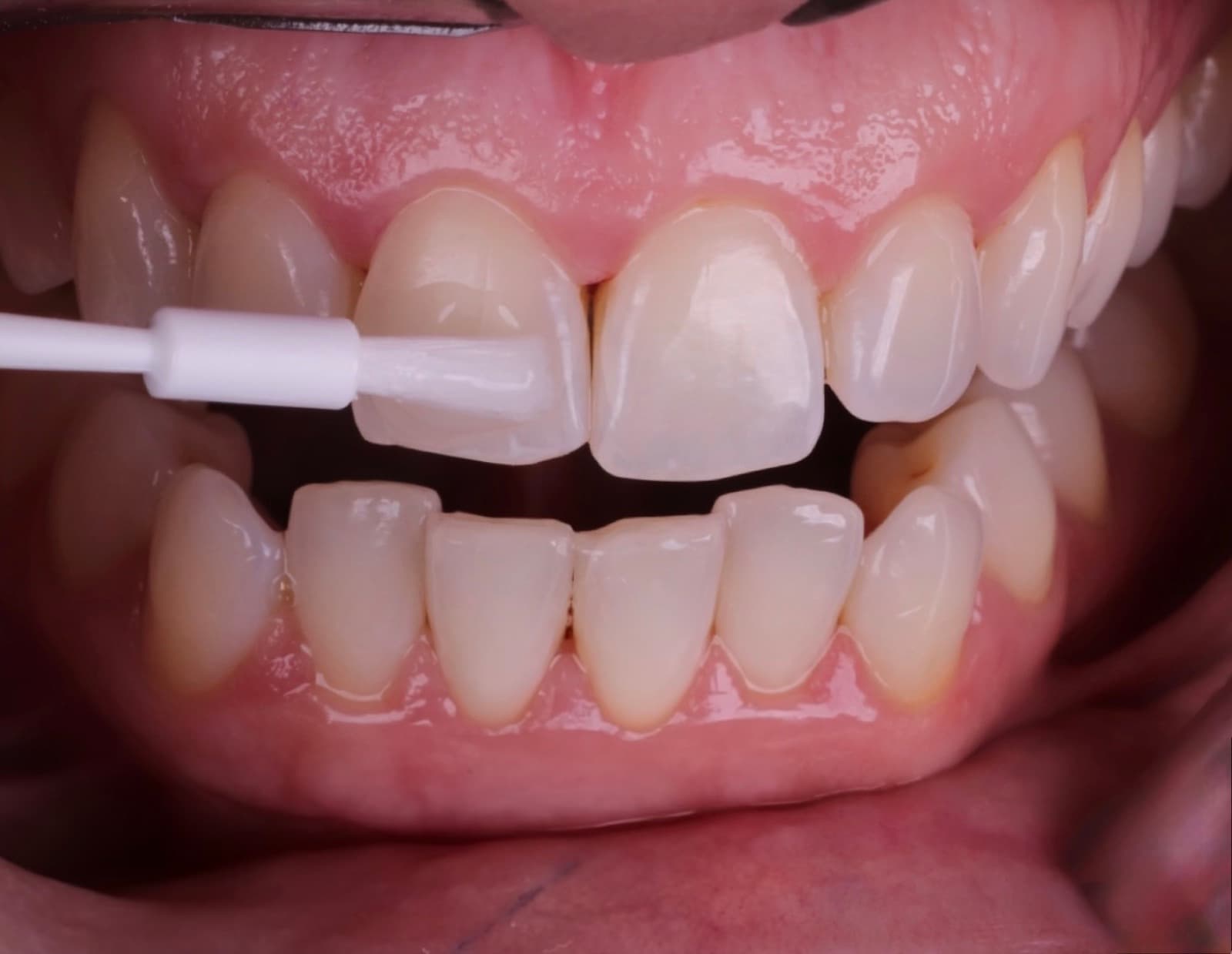
Depending on the cause, we use fluoride treatment and desensitising varnishes, seal exposed tooth necks with composite, treat hidden caries or provide a night guard for grinding. You also receive individual advice on toothpaste, toothbrush and brushing technique.
When is sensitivity an urgent warning sign?
If the pain lingers after the trigger is gone, wakes you at night or appears when you chew, the cause may be an inflamed nerve – in that case timely root canal treatment is needed to save the tooth.
Frequently Asked Questions
Do toothpastes for sensitive teeth help?
Yes, but only for mild sensitivity and once a dentist has ruled out caries or another problem. They relieve the symptom, not the cause.
How quickly will I feel better after treatment?
With fluoride treatment and sealing of the tooth necks – often immediately or within a few days. With deeper causes, it depends on the treatment needed.
Is sensitivity after whitening normal?
Mild, temporary sensitivity for 24–48 hours after whitening is normal and passes on its own. Professional systems keep it to a minimum.