
Prosthodontics in Varna
Medically reviewed by Dr. Iva Yordanova, specialist in prosthodontics ·
Prosthodontics restores badly damaged teeth and replaces missing ones – with fixed restorations such as crowns and bridges, or with removable partial and full dentures – to bring back chewing function, speech and the appearance of your smile. Every case begins with precise diagnostics and individual planning: we take into account the condition of the teeth, the bite, how chewing forces are distributed and your aesthetic expectations. Dr. Iva Yordanova is a specialist in prosthetic dentistry working in Varna with zirconia and ceramic crowns, dental bridges, and partial and full dentures.
Successful prosthetic treatment is one that restores the natural balance between function, comfort and smile.
Principles of practice — Accurate diagnosis, individual planning and the greatest possible preservation of natural tooth structure underpin every treatment. The aim is not merely to solve a specific problem, but to achieve a result that is functional, natural and stable over time.
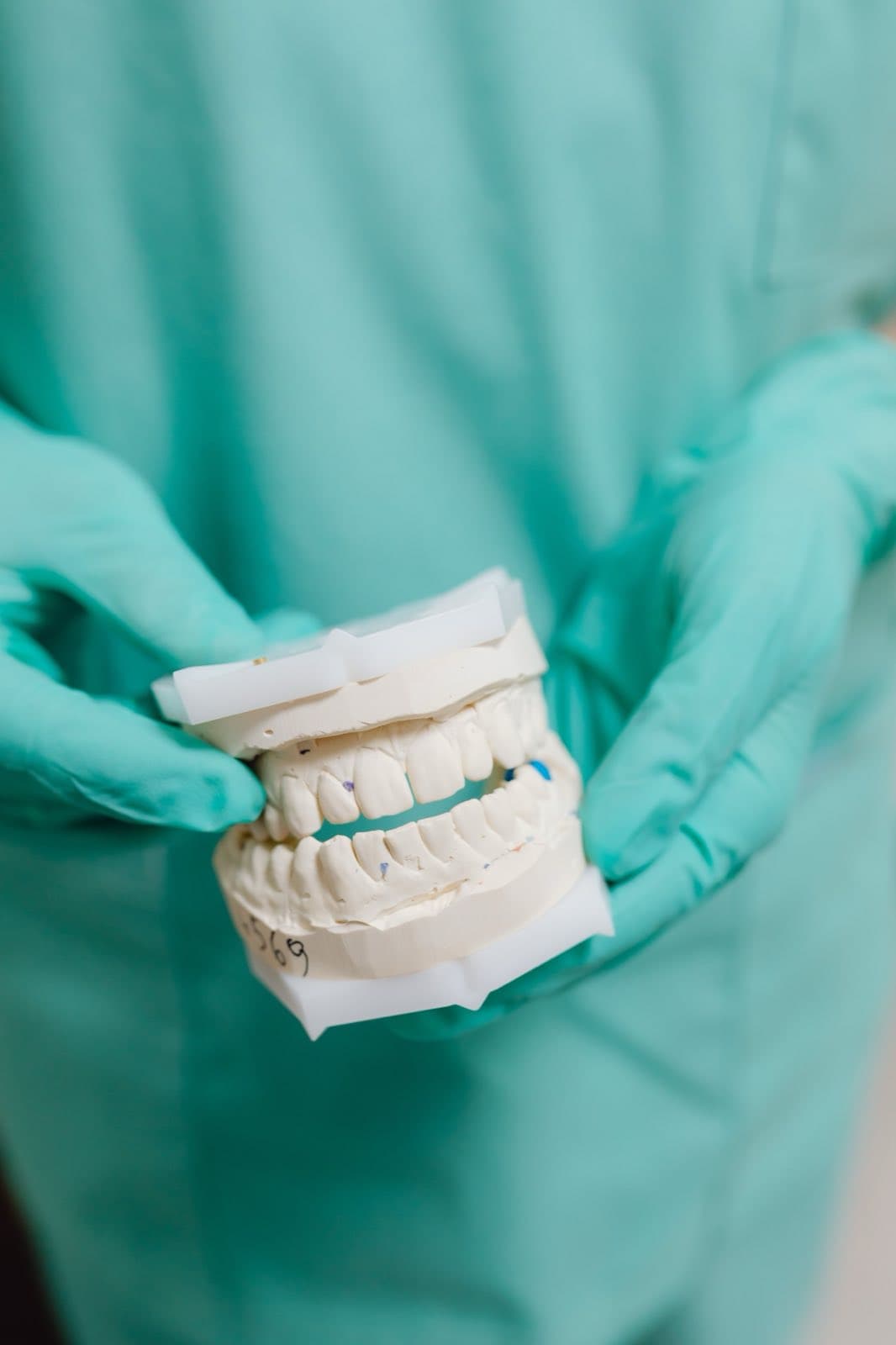
Prosthetic solutions for your smile
Zirconia crowns
A zirconia crown is a fully metal-free restoration made of zirconium dioxide that covers the whole tooth; the material is among the strongest in dentistry and allows a natural colour with no grey line at the gum. It is suitable for both front and back teeth. Each crown is planned individually for the specific tooth, the bite and the other teeth, and with good hygiene and regular check-ups it lasts 15 years and more.
Learn more about “Zirconia crowns”Strength should not come at the expense of looks — modern zirconia lets us achieve both.
Ceramic crowns
An all-ceramic crown, most often made of lithium disilicate glass-ceramic, restores the tooth with translucency and light refraction close to those of natural enamel – which makes it the first choice in the front of the smile. Shape and colour are chosen individually to match the neighbouring teeth, so the transition between the restoration and the rest of the teeth is seamless. Beyond appearance, we plan for correct contacts and function in everyday chewing.
Learn more about “Ceramic crowns”A natural tooth has depth, translucency and character — a good ceramic crown should recreate them.
Dental bridges
A dental bridge is a fixed restoration that replaces one or more missing teeth, resting on prepared neighbouring teeth or on implants and cemented permanently – unlike a denture, it is not taken out. It restores the continuity of the dental arch, chewing and speech, and stops the remaining teeth from shifting. When planning, we assess the condition of the supporting teeth, the bite and the loading to ensure stability and correct distribution of chewing forces.
Learn more about “Dental bridges”A replaced tooth should feel like a natural part of your teeth — both when you smile and when you chew.
Partial dentures
A partial denture is a removable appliance that replaces several missing teeth when some natural teeth remain, and is held in place on them by clasps or by precise, invisible attachments. It is made individually according to the position of the remaining teeth, the condition of the tissues and the features of the bite. Careful planning matters for stability and for spreading the load evenly over the remaining teeth and tissues.
Learn more about “Partial dentures”A well-planned partial denture does not just fill the gaps — it restores the function of the whole set of teeth.
Full (complete) dentures
A full, or complete, denture replaces all the teeth in one or both jaws when none remain, and is held on the gums by suction or – for considerably better stability – on implants. Making it requires precisely establishing the bite and the shape and position of the future teeth to suit the features of the face and smile, so that it does not look artificial or standardised. Because the bone under the denture changes gradually, it is checked and relined if needed every 2–3 years.
Learn more about “Full (complete) dentures”A full denture does not only replace teeth — it restores the smile, the support of the face and confidence in everyday life.
Bruxism and night guards
Bruxism is involuntary clenching or grinding of the teeth, most often during sleep, which wears down the enamel, cracks teeth, fillings and crowns and overloads the chewing muscles and jaw joints. The main protection is a custom occlusal night guard – a thin clear appliance made from an impression of the teeth and worn at night, which takes the load instead of them. Before any prosthodontic treatment we check for signs of bruxism, because uncontrolled grinding shortens the life of even the strongest restorations.
Learn more about “Bruxism and night guards”Prices
| Treatment | Price |
|---|---|
| Zirconia crown | €325 |
| All-ceramic crown (E.max) | €440 |
| Porcelain-fused-to-metal crown | €250 |
| Temporary crown | €45–60 |
| Re-cementing an indirect restoration | €30 |
The final cost of treatment is set after an examination and an individual treatment plan.
Full price listFrequently Asked Questions
Do you place dental implants?
The practice provides the prosthetic restoration on implants – making crowns, bridges and dentures that are attached to implants already in place. The surgical placement of the implant itself is planned together with a specialist, and the prosthetic plan is prepared in advance so that the implant position suits the future restoration.
Bridge, denture or implant for a missing tooth?
A bridge is fixed but requires preparing the two neighbouring teeth. A partial denture needs no drilling but is removable and less stable. An implant replaces the tooth on its own without affecting the neighbours, but requires enough bone and a longer treatment period. The decision depends on how many teeth are missing and on the condition of the neighbouring teeth and the bone.
Is a crown essential after root canal treatment?
For back teeth – yes. After root canal treatment the tooth has no blood supply and is far more prone to fracture, and covering it with a crown or overlay protects it. For front teeth with a small defect, a direct restoration is sometimes enough.
What is the difference between a zirconia and a porcelain-fused-to-metal crown?
A zirconia crown has no metal core – it is lighter, biocompatible and more aesthetic, with no grey edge at the gum. Porcelain-fused-to-metal is more affordable but less natural in colour.
How long does it take to make a crown or bridge?
Usually 7–10 working days from preparation to cementation. In the meantime you wear a temporary crown, so you are never left without teeth.
How long do dental crowns last?
A high-quality zirconia or ceramic crown lasts 10–15 years and more with good oral hygiene and regular preventive check-ups.
Bridge or denture – which is better for missing teeth?
It depends on the number and position of the missing teeth and the condition of the neighbouring ones. After a thorough examination Dr. Yordanova will present all suitable options with their advantages.