
Teeth clenching and grinding (bruxism) – treatment in Varna
Medically reviewed by Dr. Iva Yordanova, specialist in prosthodontics ·
Bruxism is involuntary clenching or grinding of the teeth, during sleep or during the day, without the person controlling it. Grinding at night is called sleep bruxism, and static clenching during the day is called awake bruxism (bruxomania). Around one adult in ten grinds their teeth in their sleep, and daytime clenching is even more common. In itself it is not always a problem, but once it wears down and cracks the teeth, breaks fillings and crowns or causes jaw pain, it needs treatment. Bruxism is not cured in a single visit – it is managed. The main protection is a custom night guard, and Dr. Iva Yordanova, as a prosthodontic specialist, also restores the teeth that grinding has already worn down.
How can you tell that you clench or grind your teeth?
Most people do not know they do it. Pay attention if you notice any of the following:
- Your partner hears grinding while you sleep
- In the morning your jaw feels tired or stiff and your temples ache
- Your teeth look worn, flattened or shorter, with small chips along the edges
- Fillings or crowns break for no obvious reason
- Sensitivity to cold without any decay
- Clicking, pain in front of the ear or difficulty opening the mouth
- Tooth marks along the tongue or a ridge on the inside of the cheek
- Enlarged chewing muscles that make the lower face look wider
Grinding at night and clenching during the day
The two forms differ in nature and are managed differently. Sleep bruxism happens during sleep, in short episodes, and cannot be controlled consciously – which is why the night guard is the main protection. Daytime clenching (awake bruxism) is a habit: the teeth are pressed together while concentrating, working at a computer, driving, exercising or under stress. What helps most is learning to notice it: at rest the lips are closed, the teeth slightly apart and the tongue relaxed. A reminder on your monitor or phone during the day helps the habit fade gradually.
Why do people clench their teeth?
Bruxism almost never has a single cause. Usually several factors combine:
- Stress, anxiety and prolonged tension
- Sleep disorders – snoring, sleep apnoea, frequent waking
- Caffeine, alcohol and smoking, especially in the evening
- Some medicines, most often certain antidepressants
- Acid reflux, which is associated with night-time grinding
Is the bite to blame?
For a long time a faulty bite was considered the main cause of bruxism, and many sources still say so. Current research does not confirm this: bruxism is regulated mainly by the central nervous system, not by the contacts between the teeth. That is why we do not grind down healthy teeth "to correct the bite" as a treatment for grinding. The bite matters in a different way – we fit every night guard, filling and crown precisely so as not to create overloaded points in someone who already clenches hard.
What does bruxism do to the teeth and jaw?
The forces in night-time grinding are many times greater than in normal chewing and act for hours. Over the years this leads to:
- Enamel worn down to the dentine – the teeth become shorter, yellowish and sensitive
- Cracks and fractures, sometimes down to the root
- Broken fillings and ceramic chipping off crowns and bridges
- Pain in the chewing muscles and headaches
- Overloading and pain in the jaw joints
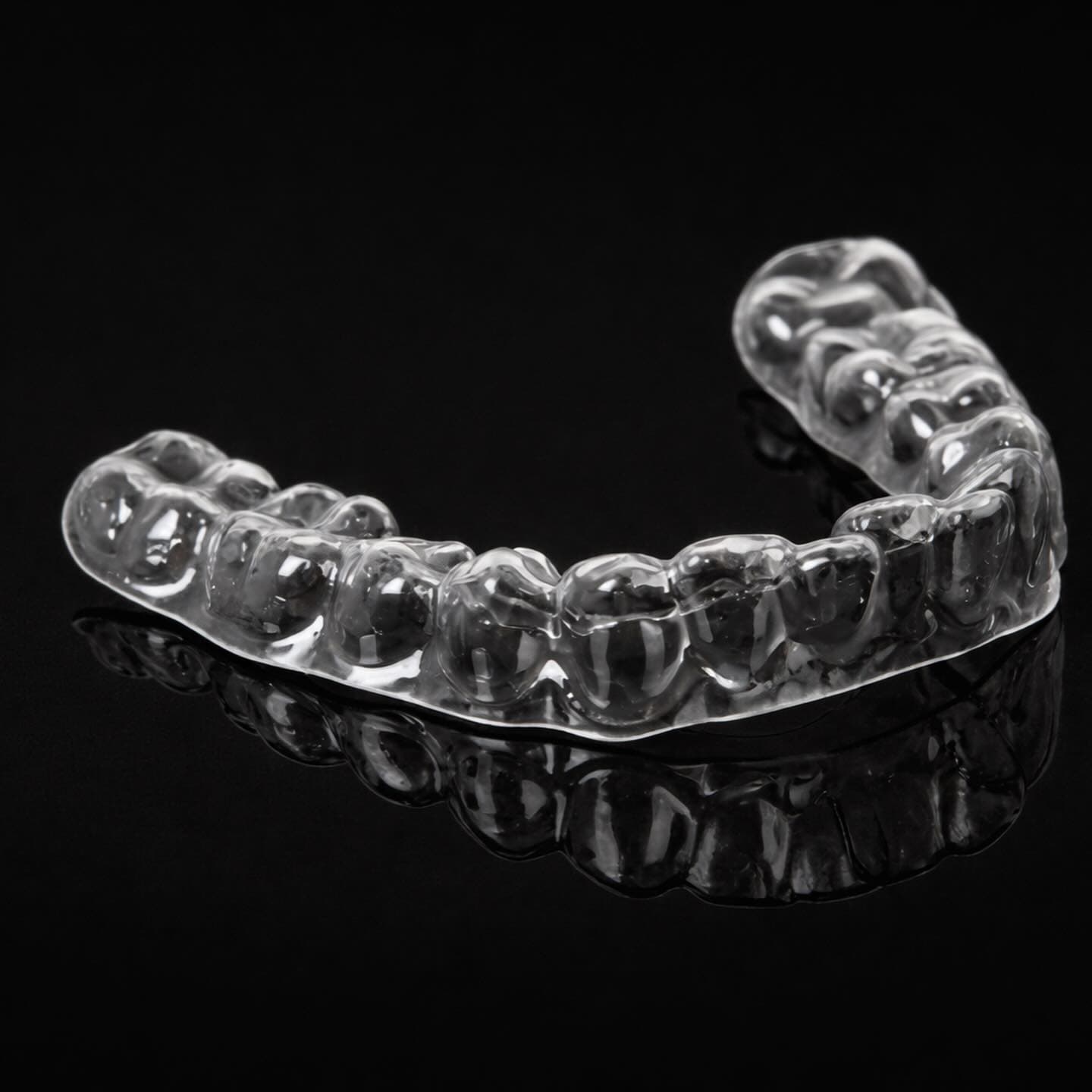
A custom night guard for bruxism
A night guard is a thin, clear appliance worn at night over one dental arch. It takes the forces instead of the teeth, spreads them evenly and helps the chewing muscles relax. It is made in a dental laboratory from an impression of your teeth and fitted in the mouth so that the bite on it is even and stable. Soft guards from the pharmacy are not made to your bite, can shift and in some people even increase clenching – so we do not recommend them for long-term use.
How treatment works with us
Two or three visits are usually needed:
- Examination – we assess tooth wear, the chewing muscles, the jaw joints and the condition of fillings and crowns
- Impression – the night guard is made individually from it in a laboratory
- Fitting – we fit the guard in the mouth and adjust the contacts until the bite on it is even
- Check-up – after a few weeks we check how you are getting on with the guard and how the muscles feel, and then at your regular check-ups
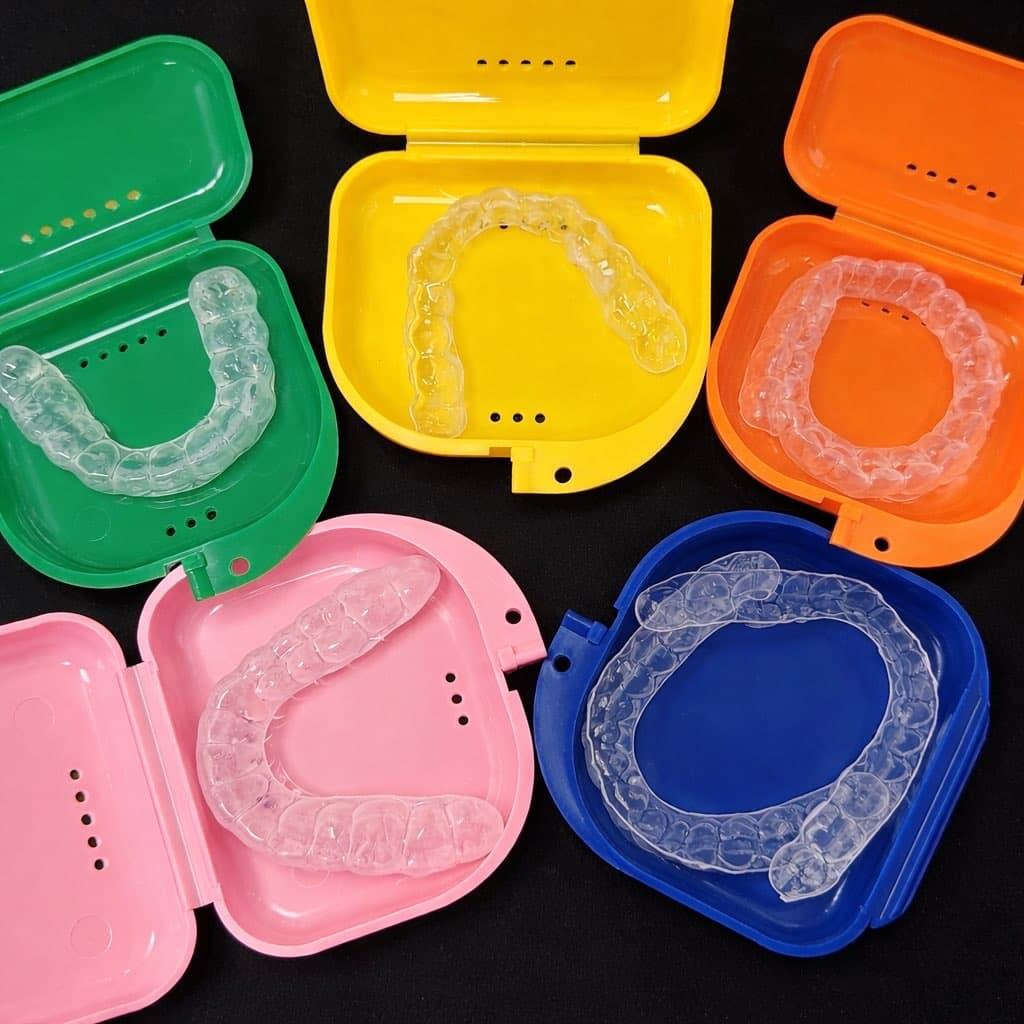
How to wear and clean the night guard
The guard is worn every night, and with heavy daytime clenching also for certain hours during the day, as the dentist advises. In the morning rinse it with cold or lukewarm water and clean it with a soft brush without toothpaste, which scratches it. Do not wash it in hot water, as it may warp. Keep it dry in its case, away from pets, and bring it to your check-ups.
Restoring worn teeth
When grinding has already worn down or cracked the teeth, a night guard alone is not enough – the lost tooth structure has to be restored. We start once the loading is under control, so that the new restoration is not damaged. Depending on the degree of wear we use fillings, ceramic onlays or crowns, and with severe wear we also restore the height of the bite. This is prosthodontic work and part of Dr. Yordanova's specialty. That is also why we check every patient for signs of bruxism before crowns or bridges: uncontrolled grinding shortens the life of even the strongest restorations.
Teeth grinding in children
Grinding during sleep is common in children, especially while they have milk teeth, and in most cases decreases with age. Bring your child to the dentist if the teeth are visibly wearing down, if they complain of jaw pain or morning headaches, or if they snore and sleep restlessly – in that case a consultation with an ENT specialist may also be needed.
A night guard does not stop the grinding – it takes the load so that your teeth do not have to.
Frequently Asked Questions
Can bruxism be cured completely?
In most cases bruxism does not disappear completely, but it can be managed. The night guard protects the teeth and relieves the muscles, and less stress and less caffeine and alcohol in the evening often reduce the grinding itself. The aim of treatment is that the teeth and jaw are not damaged.
How do I know if I grind my teeth in my sleep?
Most often your partner tells you or the dentist notices wear on the teeth. Morning tiredness in the jaw and headaches at the temples are also common clues. At an examination we can confirm bruxism from the wear on the teeth and the condition of the muscles.
I clench my teeth from stress during the day. What should I do?
Start noticing it: at rest the lips are closed and the teeth slightly apart. Reminders during the day help the habit fade. If you already have jaw pain or worn teeth, book an examination – sometimes a guard for certain hours of the day is also needed.
Will the night guard keep me from sleeping?
For the first few nights the guard feels unfamiliar, but most patients get used to it within about a week. It is thin and individually fitted so that it does not press on the teeth and gums.
Is an upper or a lower night guard better?
Both protect the teeth. The choice depends on the bite, on which teeth are more worn and on any crowns, bridges or missing teeth – we decide at the examination.
Can I use a night guard from the pharmacy?
As a temporary solution for a few nights – yes. We do not recommend it for long-term use: soft pharmacy guards are not made to your teeth, do not spread the load evenly and in some people increase clenching.
How long does a bruxism night guard last?
Usually several years, depending on how hard you grind and how it is cared for. At check-ups we look for wear and cracks and adjust or replace it if needed.
How much does a bruxism night guard cost?
The price depends on the type of guard and whether other procedures are needed, so we determine it after an examination. You receive a clear plan with the exact cost before treatment begins.